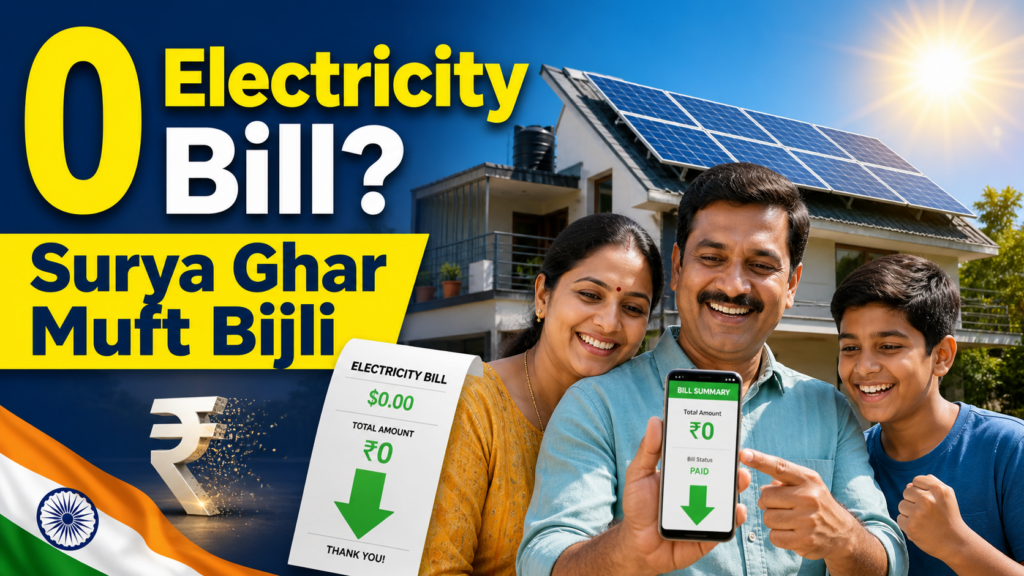
India is pushing hard toward clean energy, and rooftop solar is now a central part of that plan. One of the most important steps in this direction is the PM Surya Ghar Muft Bijli Yojana. This scheme aims to help households install solar panels and reduce their electricity bills, in many cases down to zero. With the help of the solar roof top panels, households can consume up to 300 units of electricity for free.
If you are a homeowner, this scheme directly affects you. It can cut your monthly expenses and give you energy independence. Here is a detailed, practical breakdown so you can understand exactly how it works and whether you should apply.
To know more about this great scheme, go through this article. Come on, let’s dive deep into this scheme with their objectives, benefits, eligibility, and Application Process.
Objectives:
PM Surya Ghar Muft Bijli Yojana is an Indian government scheme launched by Prime Minister Narendra Modi on February 15th, 2024, in the budget 2024-2025. The aim of the scheme is to provide rooftop solar electricity to households. Under the scheme, the government has decided to provide a subsidy for residents to install solar panels on their roofs. This will help the residents save money on their electricity bills as they use solar power for their electricity.
Almost, 1 Crore households are going to benefit via this solar panel scheme. Also, Indian government can save up to Rs. 75,000 Crores per year in its electricity cost, so they are promoting the Solar panel scheme. This is the best initiative introduced by the government to combat climate change and promote green energy.
Why This Scheme Matters
Electricity costs in India are rising. Urban households often pay between ₹6 to ₹10 per unit. A family consuming 250 to 300 units per month can easily spend ₹1500 to ₹3000 every month.
Now consider this.
A rooftop solar system can generate that same electricity for free after installation. Over 20 to 25 years, the savings are significant.
The government understands this. That is why it is offering direct subsidies to make solar affordable.
Benefits:
- Free Electricity: Households get free electricity up to 300 units from their solar panels.
- Billed Electricity: After the usage of 300 units, the electricity is billed. But still, you can save the cost and also, you can earn by selling the surplus power back to the distribution company (DISCOM).
- Reduction in cost: Household will get low electricity bills and for the government, it can save fossil fuel and cost of making the electricity.
- Subsidy: Government is about to give subsidies to 1 crore households. Almost 40% of the installation cost is covered by the subsidy. That is from Rs. 30,000 to Rs.75,000.
- Save on bills: By installing the solar panels, you can significantly reduce the bills and save up to Rs. 15,000 annually.
- Environmental Effect: Reduce the carbon emission and increase the use of renewable energy.
- Employment Opportunities: Youth get employment or revenue opportunity such as manufacturing, installation and maintenance.
- Loan options: For installing the Solar system, householder will get the collateral-free loans along with low interest rate.
Subsidy Structure:
The government will give the subsidy based on the slab below:
Subsidy for common households:
| Average Monthly electricity consumption | Rooftop Solar Plant Capacity | Subsidy |
| 0 to 150 units | 1 to 2 KW | Rs.30,000 to Rs.60,000 |
| 150 to 300 units | 2 to 3 KW | Rs.60,000 to Rs.78,000 |
| Greater than 300 units | Above 3 KW | Rs.78,000 |
In detail:
For each KW Rs.30,000 is given as subsidy up to 2 KW. So, for 2 KW the subsidy is Rs.60,000.
Above 2 KW, Rs.18,000 is increased. Hence, Rs.78,000 is the maximum subsidy given.
Subsidy for Group Housing Society (GHS) / Resident Welfare Association (RWA):
- For setting up the solar panel for common areas like lift, lights and EV charges Rs.18,000 is provided as a subsidy for per KW up to 500 KW.
- Rs.3 is charged per KW for per house.
- Limitation of 500 KW includes both the individual and group society level.
How Much You Can Save
Let’s look at a real example.
Assume you install a 3 kW solar system.
- Total cost: ₹1.5 lakh to ₹1.8 lakh
- Subsidy: ₹78,000
- Final cost: Around ₹80,000 to ₹1 lakh
Now consider your monthly electricity bill:
- Average bill: ₹2000
- Annual cost: ₹24,000
Your system pays for itself in about 4 to 5 years. After that, electricity is almost free for the next 20 years.
System Size Guide Based on Your Usage
Choosing the right system size is critical.
Here is a simple guide:
- 0 to 150 units per month: 1 to 2 kW system
- 150 to 300 units per month: 2 to 3 kW system
- Above 300 units: 3 kW or more
If you undersize your system, you will still have electricity bills. If you oversize, your upfront cost increases.
Eligibility:
- Must be an Indian Citizen.
- They must belong to lower middle or middle class to avail the benefit.
- Should have a valid electricity connection.
- Should not have availed for any solar related subsidy.
- Also, one should have own residential property with the rooftop space for installing solar panels.
Both urban and rural households can apply.
Documents Required:
- Aadhar Card as identity and address proof
- Electricity bill to know the consumer number and details.
- Bank Passbook
- Passport size photograph
- Proof for property ownership such as property tax receipt, sale deed or ownership certificate.
- Income Certificate.
Application Process
- Go the official website of PM Surya Ghar Mufti Bijli Yojana.
- Make the registration at first.
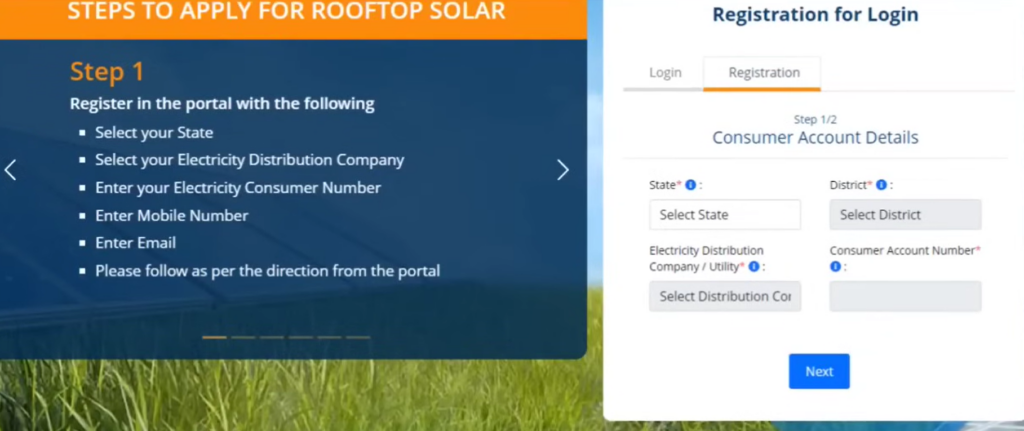
- Click on Login and select the Consumer Login.
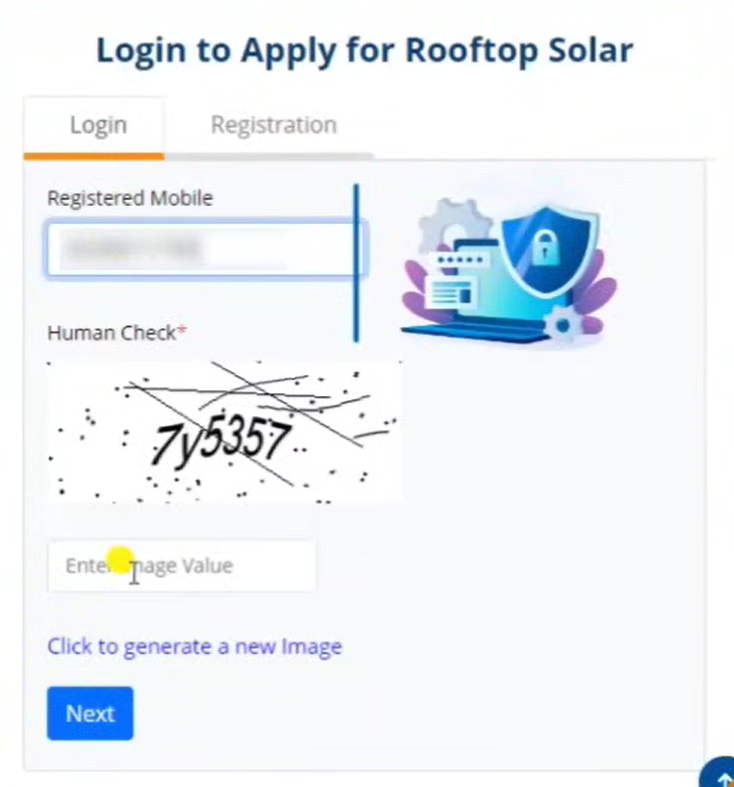
- Enter the mobile number, CAPTCHA, select the check box and click on Verify, theOTPwill be generated. Enter the OTP and click on login.
- Now a consumer pop up appears. Fill out all the consumer details such as Name, Mobile number, Email ID, Address, state, district, Pin code, and click on save.
- A Pop up appears as do you want vendor to apply. Select Yes or No.
- Select the Vendor from the list of vendors operating in your location and click on Yes. You will receive a pop with Success message.
Tend to fill application yourself:
- Select state, district, Electricity distribution company, consumer number, fetch details and click on Next.
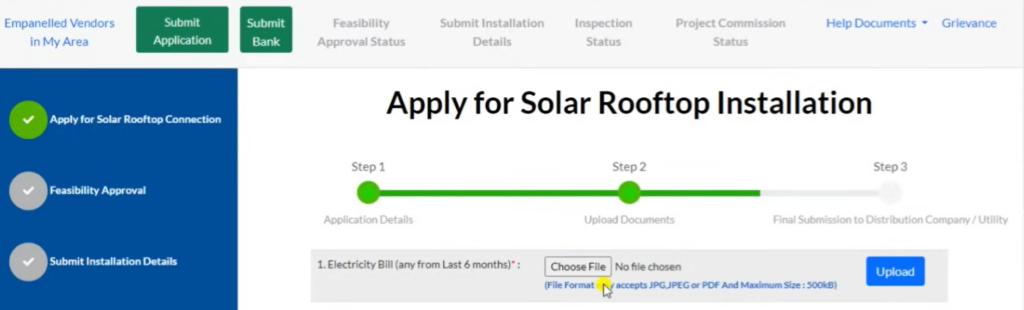
- Fill out the applicants’ details, Electricity distribution company details, Solar rooftop details such as roof top category, capacity, latitude and longitude.
- Upload the required documents and submit the application form.
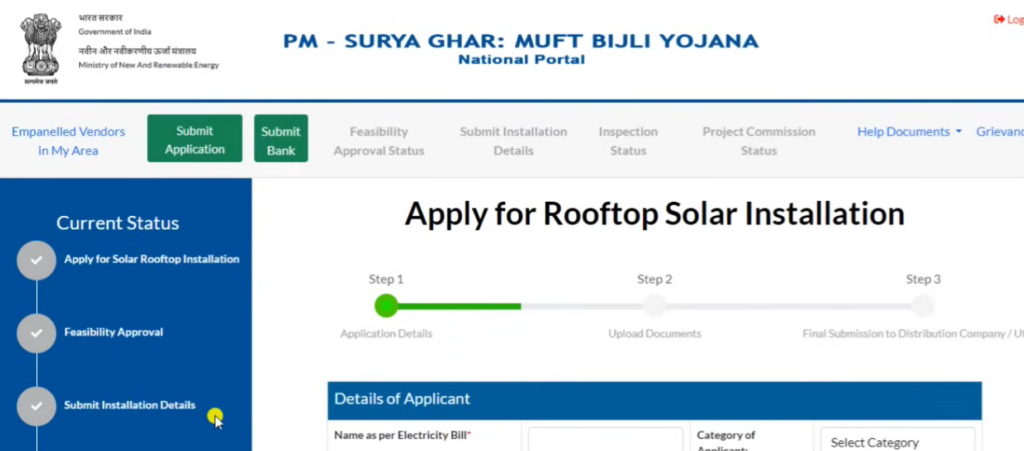
How will you get the subsidy?
- DISCOM will approve the feasibility and then, install the solar plant.
- After the installation, give the plant details and apply for the net meter.
- Once the net meter is installed, DISCOM will inspect and you will receive the Commission Certificate in the PM Surya Muft Bijili Website.
- Give the bank details, cancelled cheque and submit it. You will receive the Subsidy within 30 days.
Challenges You Should Consider
The scheme is useful, but it is not perfect.
- Initial Cost: Even after subsidy, you need to invest around ₹80,000 or more.
- Roof Space Requirement: You need around 100 square feet per kW. A 3 kW system needs about 300 square feet.
- Sunlight Availability: Performance depends on sunlight. Cities like Chennai have strong solar potential, which works in your favor.
- Vendor Quality: Choosing the wrong vendor can lead to poor installation and lower efficiency.
PM Surya Ghar Muft Bijli Yojana is a successful and transformative initiative launched by our government that makes solar power accessible and affordable for all Indian households, with the goal of installing 10 million rooftop solar systems. So far, almost 10 lakh installation has been completed. The subsidy will be provided only for the first 10 million installments. So, gear up to be the one to avail subsidy and take part in this initiative of our government to go green.
Read More